
 English
 Français
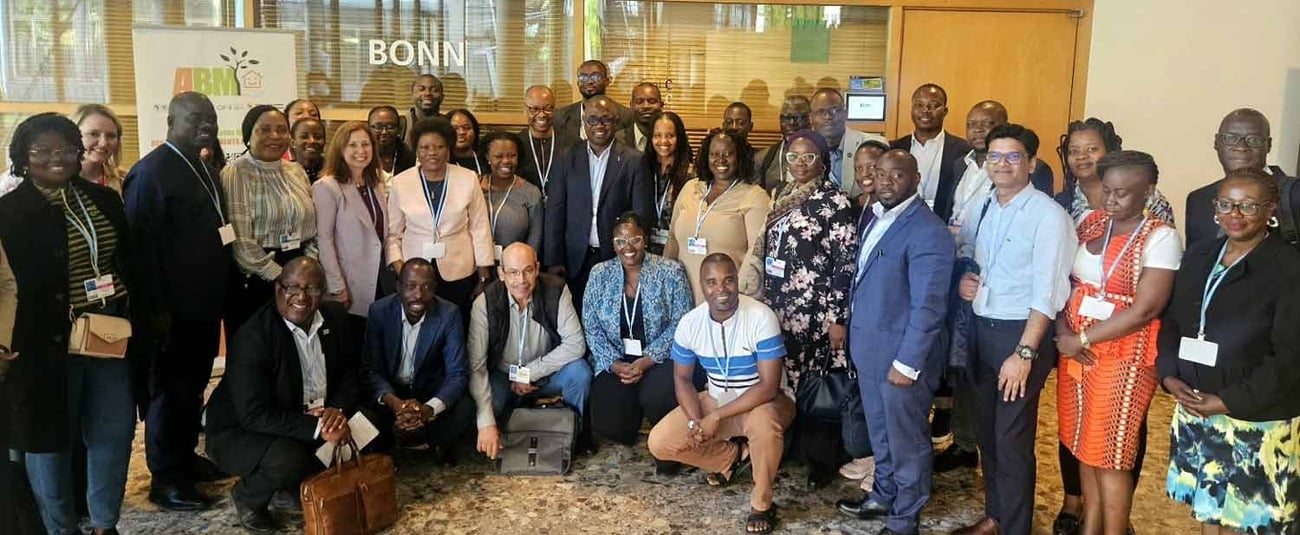
As countries gathered in Bonn for the 62nd session of the UNFCCC Subsidiary Bodies (SB62), a high-level side event titled “Making the Investment Case for African NDCs”, co-organized by the African Development Bank and the European Bank for Reconstruction and Development (EBRD), brought much-needed focus to the importance of making African Nationally Determined Contributions (NDCs) more holistic, implementable, and investment-ready.
The event provided a timely platform to elevate African perspectives and showcase ongoing efforts to align climate ambition with long-term development priorities and financial viability as countries prepare their next generation of NDCs (NDC 3.0).
Opening the discussion, Margaret Athieno Mwebesa, Commissioner of Uganda’s Climate Change Department, welcomed the Bank’s ongoing technical support in conducting the stock take for Uganda’s current Nationally Determined Contribution (NDC) as part of the NDC 3.0 process. She emphasized the critical link between financing and implementation, noting:
“Without investments, our NDCs are as good as useless. With less than 10% of Uganda’s NDC financing mobilized as of 2024, we must do more to make our climate plans truly bankable.”
In a compelling keynote, Prof. Anthony Nyong, Director for Climate Change and Green Growth at the African Development Bank, highlighted the urgency of scaling support for climate investment in Africa and the need for strengthened partnerships: “Africa does not lack ambition. What it needs is partnership, investment, and systems-level support,” he stated. “Let us move beyond doom and gloom. Africa is ripe for climate-smart investment—home to 70 percent of its infrastructure yet to be built, rich in renewables, and holding vast reserves of arable land and critical minerals.”
He also highlighted the Bank’s Climate financing milestones—growing from nine percent to 55 percent climate finance commitment between 2016 – 2023 and outlined tools such as the Africa NDC Hub, Adaptation Benefits Mechanism, and Climate Action Window, all designed to unlock investment-ready, country-driven climate actions.
Ms. Sung-Ah Kyun, Associate Director of Climate Strategy and Delivery of the EBRD and co-Chair of the MDB Policy and Country/Client Engagement Working Group, added, “MDBs have been collectively working to support countries in developing and implementing their NDCs and LTS, including at sectoral and subnational levels, and are accelerating these efforts through the MDB LTS Program, launched at COP28 and hosted under World Bank’s Climate Support Facility”
The event featured a moderated country dialogue, exploring the evolving experiences of Botswana, Ghana, and Zimbabwe in developing and implementing their NDCs.
Representing Ghana, Seidu Issifu, Minister of State for Climate Change and Sustainability, reflected on Ghana’s progress and outlook. He emphasized the country’s financing needs—between $9.3 billion and $15 billion for the 2021–2030 period—and called for increased support in identifying and scaling sectoral investment opportunities, especially in energy, transport, and agriculture.
From Botswana, Balisi Gopolang, Director of Climate Change, shared lessons learned from their second NDC submission. He noted that while the initial INDC process was new and unfamiliar, Botswana is now better positioned to mobilize partnerships, with a focus on energy investments that span both mitigation and adaptation goals.
Lovemore Dhoba, Deputy Director for Climate Change in Zimbabwe, presented the country’s recently submitted NDC 3.0, which prioritizes the integration of cross-cutting issues such as gender and youth. He reaffirmed Zimbabwe’s commitment to aligning climate ambitions with development priorities through effective institutional coordination.
The panel discussion, moderated by Uzoamaka Nwamarah, Climate Change Advisor, The Commonwealth Secretariat, brought together experts from development partners and UN agencies to reflect on how they are supporting African countries in strengthening NDCs.
Davinah Milenge Uwella, Chief Programme Coordinator at the African Development Bank, spoke about Africa NDC Hub, hosted by the Bank, which brings together 21 other member partners to coordinate Technical Assistance support to African countries to prepare and implement NDCs, Long-Term Strategies, National Adaptation Plans and Biennial Transparency Report.
She emphasized the Africa NDC Hub’s ongoing role in providing coordinated technical assistance, with over 10 countries provided with NDC and strategies development support. Paola Ridolfi, Climate Change Adviser at the World Bank, emphasized the importance of evidence-based investment planning and highlighted the role of the World Bank’s Country Climate and Development Reports in unlocking climate finance and aligning investments with development pathways.
From UNDP, Catherine Diam-Valla, Co-Lead of the UNDP Climate Promise 2025, highlighted the broad footprint of the Climate Promise initiative, supporting countries to embed NDCs into national development frameworks, strengthen climate budgeting and transparency systems, and build access to carbon markets.
Chiagozie Udeh, Programme Specialist at UNFPA, stressed the need for NDCs to reflect population dynamics, gender equality, and youth empowerment for inclusive, people-centered climate action. “The climate crisis is not just about emissions—it’s about people. We must ensure our NDCs are responsive to social realities.”
The session also featured a technical presentation by Lucy Naydenova, Adaptation Benefits Mechanism Expert at the African Development Bank, on a practical guide for a holistic approach to NDC 3.0, focusing on how adaptation outcomes can be monetized to crowd in private investment.
Prof. Nyong concluded by affirming the “Bank’s commitment to working hand-in-hand with partners—governments, MDBs, the private sector, and civil society to ensure that Africa’s climate goals are not only well-articulated, but well-financed and effectively implemented.”